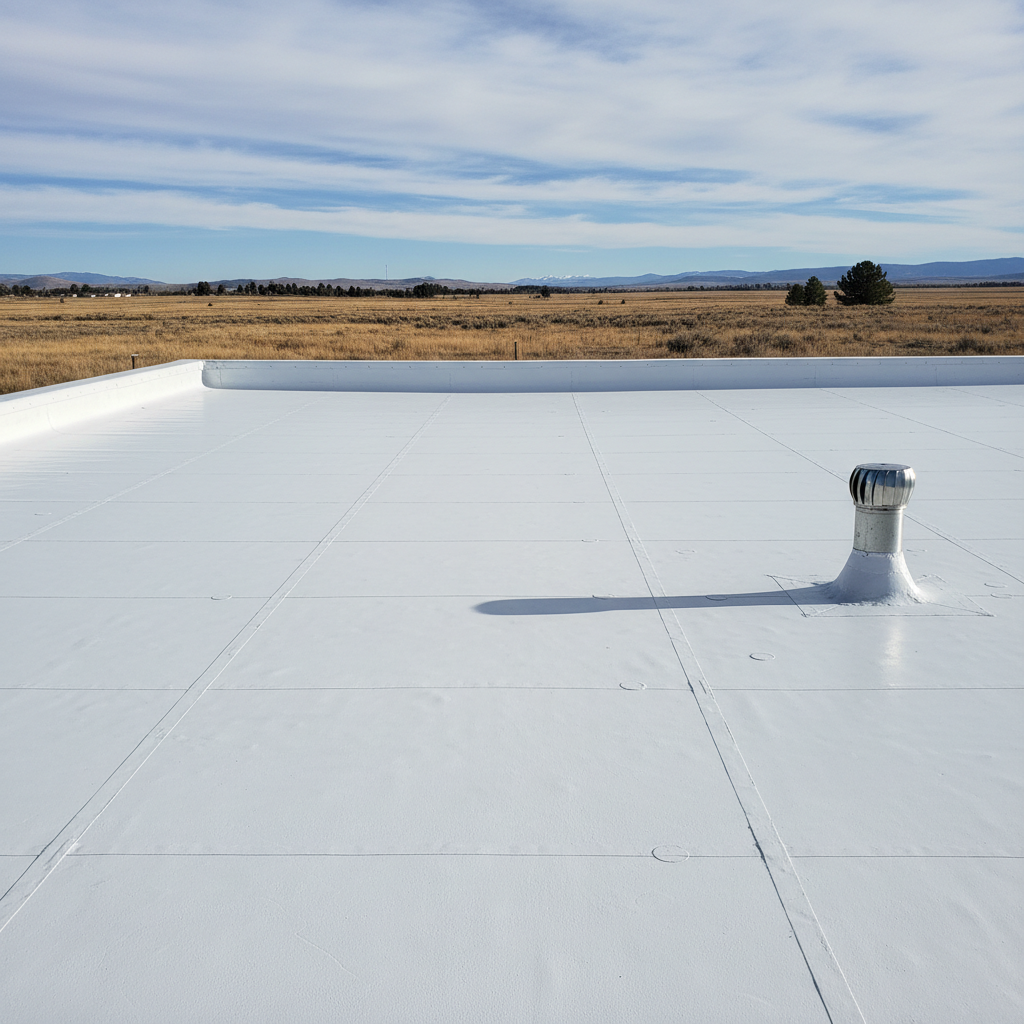
Alright, let's talk TPO roofing. If you own a commercial building, an apartment complex, or even a large garage with a low-slope or flat roof here in Great Falls, you've probably heard of TPO. It's a common material, and for good reason, but folks often have a lot of questions about it. I'm going to hit the most common ones I hear, straight up, no fluff.
What is TPO roofing, really?
TPO stands for Thermoplastic Polyolefin. Sounds fancy, right? Basically, it's a single-ply membrane, meaning it's one layer of synthetic material that we roll out and attach to your roof deck. It's made up of a few layers: a TPO polymer base, a polyester fabric scrim (that's for strength), and a TPO top ply. The key thing about TPO is that the seams are heat-welded together. We use a special hot-air welder that essentially melts the two pieces of TPO together, creating a watertight bond that's stronger than the material itself. That's a big deal for preventing leaks.
Why is TPO so popular for commercial buildings?
There are a few big reasons why TPO has become a go-to for commercial flat roofs. First, it's durable. It can stand up to the kind of weather we get here in Montana – those scorching summer days and brutal winter freezes. It's also pretty resistant to punctures and tears, which is good if you have HVAC units or other equipment on your roof that needs servicing. Second, it's energy-efficient. Most TPO comes in light colors, like white or light gray, which reflect the sun's UV rays. That means your building stays cooler in the summer, and you save on air conditioning costs. Third, it's relatively lightweight compared to some other systems, which can be a plus for older structures. And finally, it's cost-effective. It's not the cheapest option out there, but it offers a great balance of performance and price over its lifespan.
How long does a TPO roof typically last in Great Falls?
This is a big one, and the answer isn't a simple number. A properly installed TPO roof, with good maintenance, can last anywhere from 15 to 25 years, sometimes even longer. The thickness of the membrane plays a role (we usually recommend 60-mil or 80-mil for commercial jobs). But honestly, installation quality is huge. If the seams aren't welded right, or if the flashing details are sloppy, you're going to have problems way sooner. The intense sun we get here, combined with the freeze-thaw cycles, can put stress on any roof. That's why choosing a reputable contractor like Top Line Roofing Great Falls who knows how to handle these conditions is critical. Regular inspections and minor repairs can also extend its life significantly.
What kind of maintenance does a TPO roof need?
While TPO is pretty low-maintenance, it's not no-maintenance. You can't just put it up and forget about it, especially with the winds we get around here that can blow debris onto roofs. I always recommend at least two inspections a year – once in the spring after the snow melts, and again in the fall before winter hits. During these inspections, you'll want to look for:
- Any debris like leaves, branches, or trash that could block drains or scuppers.
- Punctures or tears, especially around foot traffic areas or equipment.
- Separated seams or flashing.
- Pooling water after rain, which indicates drainage issues.
Keeping the roof clean and ensuring proper drainage are the two biggest things you can do to prolong its life. If you catch small issues early, they're usually cheap and easy to fix.
Can TPO be repaired if it gets damaged?
Absolutely. That's another advantage of TPO. Because it's a thermoplastic, we can heat-weld new patches of TPO directly onto existing material. If you have a small puncture or tear, we can clean the area, cut a patch, and weld it right over the damage. For larger sections, we can cut out the damaged area and weld in a new piece. It's a pretty straightforward process for a trained professional. This repairability means you don't always have to replace the whole roof if there's isolated damage, saving you money in the long run.
How does TPO handle Great Falls' extreme weather?
This is where TPO really shines compared to some older systems. TPO is designed to be flexible, even in cold temperatures. That's important when you've got those big temperature swings we see, where the roof can expand and contract a lot. It's also resistant to UV degradation, which is crucial with our high-altitude sun. The heat-welded seams are much more robust against wind uplift than, say, glued seams you might find on some other membranes. I've seen TPO roofs hold up really well through our hailstorms, too, though severe hail can damage any roof. We always recommend a thorough inspection after any major weather event, especially if you're in an area like the West Side where older buildings might have less robust roof decks.
Is TPO environmentally friendly?
Compared to some traditional roofing materials, TPO is generally considered a more environmentally friendly option. First, its reflective surface reduces the urban heat island effect, which is when cities get hotter than surrounding rural areas due to dark surfaces absorbing heat. That's good for the local environment. Second, it's often recyclable at the end of its life, though the recycling infrastructure for TPO isn't as widespread as for some other materials yet. It's also manufactured without harmful plasticizers or chlorine, which are found in some other single-ply membranes. So, while no roofing material is perfectly 'green,' TPO is definitely a step in the right direction.
Hopefully, this clears up some of your questions about TPO roofing. It's a solid choice for many commercial properties here in Great Falls, offering good performance and value. If you've got more questions or want to talk about your specific building, don't hesitate to give us a call at Top Line Roofing Great Falls. We're always happy to help you figure out the best solution for your roof.