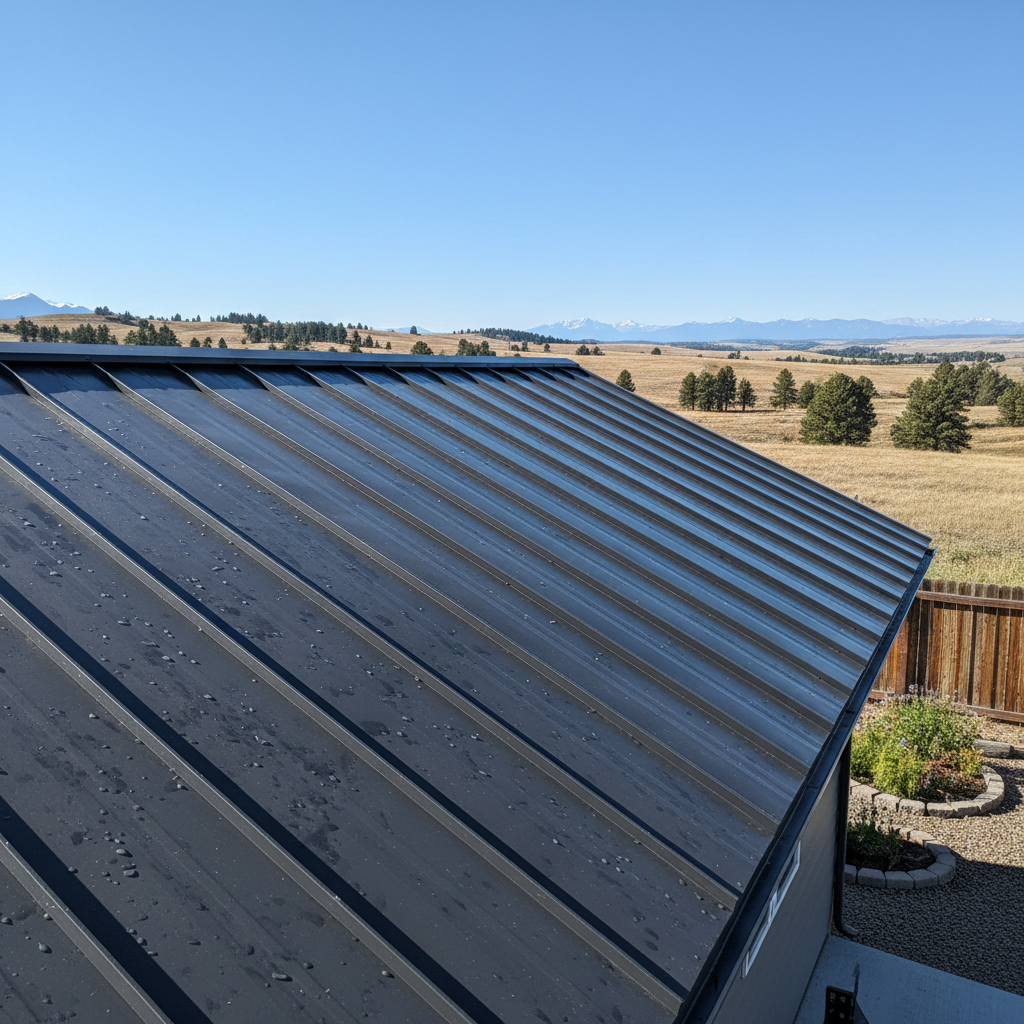
Living along the Hi-Line means dealing with some of the most punishing weather in the country. Great Falls experiences sub-zero winter blasts, baking summer sun, and hurricane-force gusts rolling off the Rocky Mountain Front. Because of that weather, more and more local homeowners are looking at Metal Roofing as a permanent fix. Top Line Roofing Great Falls gets asked a ton of questions about how these systems actually perform in our climate. The most common questions about Metal Roofing in Great Falls are addressed below.
How do Metal Roofs handle the notorious Great Falls winds?
Shingles rely on basic adhesive strips that can get brittle and lift once those 70-mph winds whip down off the Divide. Metal Roofing systems, especially standing seam profiles, are locked together mechanically. The panels and trim are engineered to resist high wind uplift. When the panels are fastened correctly with the right clips and heavy-duty screws, they do not give the wind anything to catch onto. Top Line Roofing Great Falls has seen plenty of shingle roofs scattered across yards while a properly installed Metal Roof stays locked tight in Great Falls.
Will a Metal Roof turn my house into a drum during a hailstorm?
People worry they will not be able to hear the television when it rains or hails. The reality is that a Metal Roof goes over a solid deck of plywood and heavy underlayment, plus your home attic insulation. Inside the house, you will not notice much difference compared to asphalt shingles. During a torrential downpour or a standard hail event, the sound is normal. Most modern metal systems also carry high impact resistance ratings, meaning they shrug off hail that would punch right through standard asphalt shingles and leave you filing an insurance claim on your Great Falls home.
Do Metal Roofs attract lightning during thunderstorms?
This is an old myth that refuses to die. Metal does conduct electricity, but it does not pull lightning toward your house any more than other materials. In fact, if lightning does strike a Metal Roof, it is actually safer in one specific way because metal is non-combustible. The material will not catch fire from a strike. Plus, because the entire system ties into your home overall path to ground, it can help dissipate the electrical energy safely instead of letting it spark through a wooden roof deck in Great Falls.
What happens when heavy snow piles up on a Metal Roof?
Winter snow loads can crush weaker structures, but Metal Roofing helps you out here. The smooth surface means snow does not cling to it the way it grips rough shingle granules. Once the roof warms up slightly underneath or the sun hits it, the snow sheet breaks loose and slides off in a controlled rush. You just have to be smart about where the snow lands. Top Line Roofing Great Falls always recommends putting snow guards or retention systems above doorways, walkways, and back decks so an unexpected avalanche does not bury your front porch or rip off your gutters.
Will a Metal Roof rust out in our climate?
Modern metal panels are not bare sheet metal that rusts the first time it rains in Great Falls. They feature advanced metallic coatings like galvalume, which is a mix of aluminum and zinc, and are finished with heavy-duty baked-on paint systems that resist fading, chalking, and corrosion. They handle moisture, melting snow, and heavy UV exposure without breaking down. You get decades of clean performance without worrying about rust creeping in at the edges of your Metal Roof.
Are Metal Roofs actually worth the higher upfront cost?
The initial price tag for a quality Metal Roof is higher than slapping down a basic set of asphalt shingles. But you have to look at the math over time. An asphalt roof up here in Great Falls usually gives you about 15 to 20 years before the wind and sun chew it up. A standing seam Metal Roof can easily last 50 years or more with virtually zero maintenance. When you factor in never having to pay for a full tear-off and replacement every couple of decades, Metal Roofing usually ends up being the cheaper option over the long haul for homes in Great Falls.
If you are tired of patching leaks or cleaning granules out of your gutters every spring, give Top Line Roofing Great Falls a call. Top Line Roofing Great Falls will look at your layout, talk through your options, and give you an honest take on whether a Metal Roofing upgrade makes sense for your property in Great Falls, Montana.