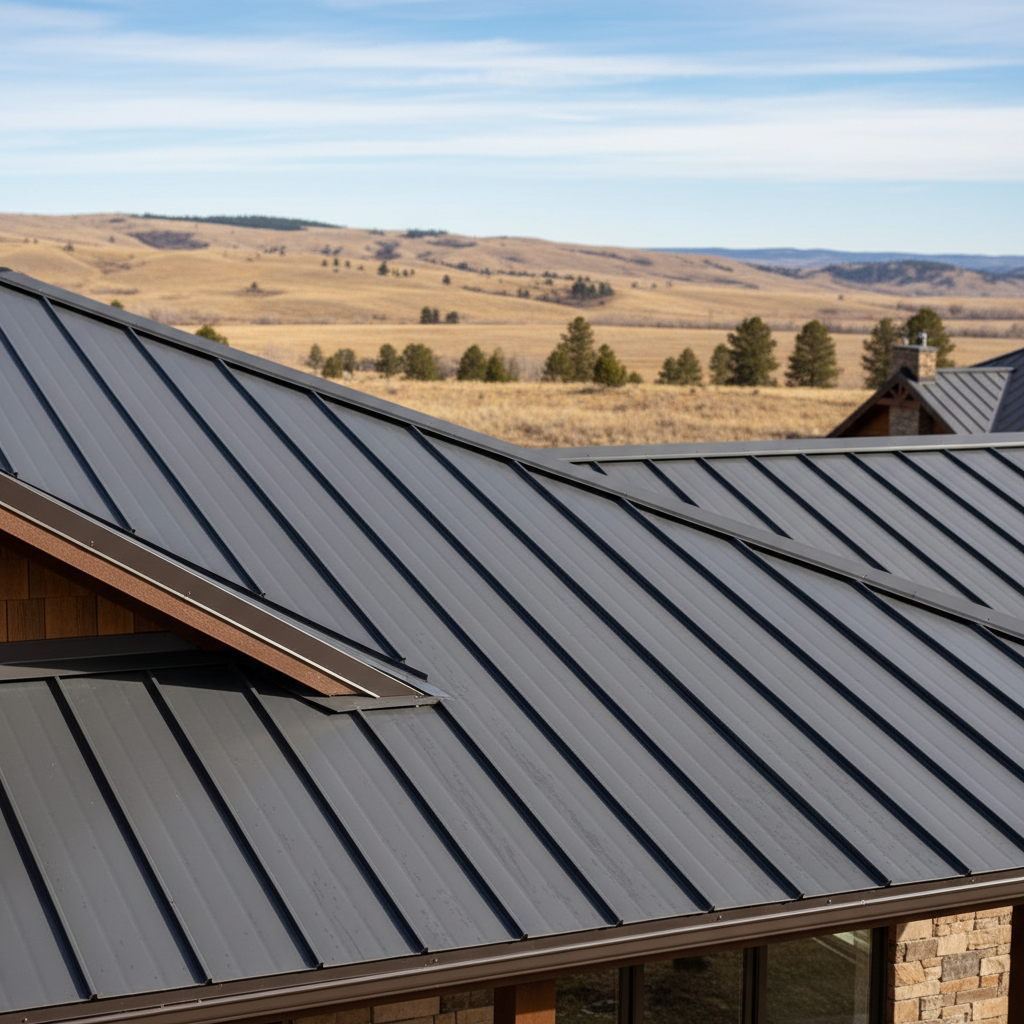
Homeowners often grow tired of patching up asphalt shingles every time a strong windstorm blows off the plains. Top Line Roofing Great Falls has watched more and more property owners make the switch to metal. Before taking the plunge, property owners usually have many questions. Top Line Roofing Great Falls will walk through the most common things people ask us about putting a metal roof on a Central Montana house.
Will a metal roof turn my house into an oven during summer?
This is a common worry, especially when July temperatures are baking the dry clay soil around town. A properly installed metal roof will not make your upstairs unbearable. In fact, it often does the exact opposite. Metal systems use reflective pigments and are typically installed with an airspace above the deck. That gap creates a thermal break, meaning the radiant heat bounces right back up instead of soaking into your attic insulation. Combined with soffit and ridge vents, your house will often stay cooler than it would under dark asphalt shingles.
How do metal roofs handle our brutal Great Falls winds?
Great Falls experiences very strong winds, plain and simple. Gusts roaring off the Rocky Mountain Front can easily peel up weak edges and loose tabs on standard shingle roofs. Standing seam metal roofing handles this punishment very well because the fasteners are concealed and the interlocking panels act as a single, cohesive unit. There are no exposed edges for the wind to grab. When Top Line Roofing Great Falls installs these systems around neighborhoods near Gibson Park or up on the benches, our team makes sure the trim and closures are locked down tight so they will not budge when the weather turns bad.
What happens when it hails?
Hail is a regular visitor here, and it leaves many dented cars and battered gutters in its wake. Quality metal roofs carry a Class 4 impact resistance rating, which is the highest score available. While a massive hailstorm might leave a cosmetic dimple on a softer aluminum or steel panel, it rarely punctures the material or causes leaks. Insurance companies around Cascade County even offer policy discounts for Class 4 roofing materials because they hold up very well against severe storms.
Are they terribly loud when it rains or snows?
People picture sitting in their living room listening to a loud drum solo every time a rainstorm hits. In reality, a metal roof is much quieter than you think. When Top Line Roofing Great Falls installs a metal system over solid plywood decking, heavy synthetic underlayment, and standard attic insulation, that sound gets thoroughly dampened. Homeowners tell us they can barely hear a light rain, and heavier downpours just sound like a gentle hum.
Does snow slide off dangerously fast?
Metal is slick, and heavy winter snowpacks will slide off all at once when things warm up. If you have a walkout basement, a front porch, or a back deck right beneath a clean eave, that can create a hazard. Top Line Roofing Great Falls can install snow guards or snow fences strategically above entryways and walkways. These devices break the snow up into smaller chunks so it melts safely instead of dropping an avalanche on your head.
How long will a metal roof actually last?
If you buy an asphalt shingle roof, you will likely be doing the whole project over again in 15 to 20 years, or less if the wind gets to it first. A properly installed metal roof easily lasts 40 to 70 years or more. For most people, this is the last roof they will ever buy for their home in Great Falls, MT. The upfront investment is higher than shingles, but when you factor in the longevity and the lack of constant repair bills, it ends up paying for itself over time.